Title: Heart of Darkness
Author: Joseph Conrad
# of Pages: 72 (paperback)
Genre: Fiction, Classics, Africa
Rating: ★★☆☆☆
Synopsis: Dark allegory describes the narrator's journey up the Congo River and his meeting with, and fascination by, Mr. Kurtz, a mysterious personage who dominates the unruly inhabitants of the region. Masterly blend of adventure, character development, psychological penetration. Considered by many Conrad's finest, most enigmatic story.
Review: This is one of the few classics I've read purely recreationally.
I might have enjoyed this book more if I read it in a classroom setting where I could learn to appreciate all the fine details of this book. However, since I did not delve into deep analysis of the book, I read it as it appears: a sloppy narration by a man's experience voyaging up the Congo. Whether Marlow, the protagonist, was a bad storyteller for some deeper reason does not change the fact that he is a BAD storyteller.
Although this story may also serve as a demonstration of how life was in Africa during the boom of ivory trade, it is so finely focused on one man's experience, one that is taken up by the obsession of finding Mr. Kurtz, I didn't find it very enlightening.
To paraphrase someone of Goodreads, the book is not long, yet far too long. The read can be finished in one sitting but is not worth your time.
Tuesday, March 27, 2018
Monday, March 26, 2018
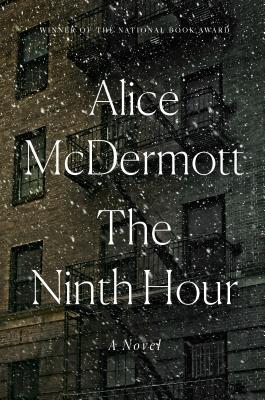
Book Blog #212: The Ninth Hour by Alice McDermott
Title: The Ninth Hour
Author: Alice McDermott
# of Pages: 247 (hardcover)
Genre: Fiction, Historical, Religious
Rating: ★★☆☆☆
Synopsis: On a dim winter afternoon, a young Irish immigrant opens the gas taps in his Brooklyn tenement. He is determined to prove—to the subway bosses who have recently fired him, to his badgering, pregnant wife—“that the hours of his life belong to himself alone.” In the aftermath of the fire that follows, Sister St. Savior, an aging nun, appears, unbidden, to direct the way forward for his widow and his unborn child. We begin deep inside Catholic Brooklyn, in the early part of the twentieth century. Decorum, superstition, and shame collude to erase the man’s brief existence. Yet his suicide, although never spoken of, reverberates through many lives and over the decades—testing the limits and the demands of love and sacrifice, of forgiveness and forgetfulness, even through multiple generations.
Review: The fact that I didn't realize this was a religious book by reading the title says a lot about how religious I am.
I was uncertain whether I should continue reading this book when I discovered how big of a role Catholicism played in the plot. I have no interest in reading about nuns nor do I necessarily have the same views and values of them. Thankfully, I realized as I progressed through the book, the story was a tale of a girl and mother who's lives inevitably were intertwined with Catholicism because of their residence in Brooklyn. It wasn't a super uptight, wholesome story like the religious stereotype led me to believe; in fact it was the exact opposite. Sally struggles with what she is told is right for her life and what she feels is right for her.
Although the writing itself is well done, Dermott's abilities as a storyteller were lacking. The story jumps across many generations and since it was not always chronological, it made it difficult to follow and stay interested.
I noticed a lot of people fell in love with this book. I just don't think the topic is for me. I wouldn't read it again, but if the synopsis (and perhaps Catholicism) interest you, I would recommend it. Otherwise, I would look elsewhere for a book to pass the time.
Subscribe to:
Posts (Atom)