Sunday, September 27, 2026

Book Blog #417: Love, Theoretically by Ali Hazelwood

Title:  Love, Theoretically
Author: Ali Hazelwood
# of Pages: 384 (paperback)
Genre: Adult, Romance, Contemporary
Rating: ★★★☆☆
Synopsis: The many lives of theoretical physicist Elsie Hannaway have finally caught up with her. By day, she’s an adjunct professor, toiling away at grading labs and teaching thermodynamics in the hopes of landing tenure. By other day, Elsie makes up for her non-existent paycheck by offering her services as a fake girlfriend, tapping into her expertly honed people pleasing skills to embody whichever version of herself the client needs. Honestly, it’s a pretty sweet gig—until her carefully constructed Elsie-verse comes crashing down. Because Jack Smith, the annoyingly attractive and broody older brother of her favorite client, turns out to be the cold-hearted experimental physicist who ruined her mentor’s career and undermined the reputation of theorists everywhere. And that same Jack who now sits on the hiring committee at MIT, right between Elsie and her dream job. Elsie is prepared for an all-out war of scholarly sabotage but…those long, penetrating looks? Not having to be anything other than her true self when she’s with him? Will falling into an experimentalist’s orbit finally tempt her to put her most guarded theories on love into practice?
Review: High 3 stars! An enjoyable read for the genre.
The author isn't doing anything revolutionary here; an academia-related romance where the main conflicts can be traced back to bad assumptions and miscommunication are not far off from what Hazelwood already did in Love Hypothesis. Love, Theoretically is basically the less comedic version.
As per typical romance books, it appeals to classic women fantasies in men: for them to be caring (and maybe overly concerned about their well being), for men to be able to read their minds (aka know women's needs without having to be a direct communicator), and of course for them to be tall and strong. Elsie is of course the damsel in distress while also being a smart, hard working physicist. Jack Smith, unsurprisingly, is the fantasy.
I loved the yearning but overall the (predictable) plot was a bit slow that made the book somewhat put-down-able. The last third of the book was actually my least favorite and felt like Hazelwood got distracted writing the smutty romance part and the open plot points were an after thought that were rapidly wrapped up at the end. 
It's also painfully clear Hazelwood is projecting her interests onto these characters. There's way too many Twilight mentions (reminds me of As the Lemon Trees Grow and all the Studio Ghibli shout outs). From reading Bride and Mate, it's pretty clear why fanfiction and the omegaverse got a mention by the main character too.
Overall an entertaining read for a romance, would recommend it for people who are interesting in the genre and are able to not take the story too seriously. 

Sunday, September 20, 2026

Book Blog #416: The Leavers by Lisa Ko


Title: The Leavers

Author: Lisa Ko

# of Pages: 335 (paperback)

Genre: Adult, Contemporary

Rating: ★★☆☆☆

Synopsis: One morning, Deming Guo’s mother, an undocumented Chinese immigrant named Polly, goes to her job at the nail salon and never comes home. No one can find any trace of her. With his mother gone, eleven-year-old Deming is left with no one to care for him. He is eventually adopted by two white college professors who move him from the Bronx to a small town upstate. They rename him Daniel Wilkinson in their efforts to make him over into their version of an “all-American boy.” But far away from all he’s ever known, Daniel struggles to reconcile his new life with his mother’s disappearance and the memories of the family and community he left behind. Set in New York and China, The Leavers is a vivid and moving examination of borders and belonging. It’s the story of how one boy comes into his own when everything he’s loved has been taken away--and how a mother learns to live with the mistakes of her past.

Review: I just couldn't get into this book.

Deming's and his mother Polly's stories are actually pretty interesting. Polly's story reads as historical fiction and delves into the perspective of what it's like to grow up in rural China and become and undocumented Chinese immigrant. Deming's story is what it's like to be the son of said immigrant and struggle with feelings of identity and belonging in white suburban America. 

However, the execution is weak; I couldn't help but wonder if this would have been a 3 or 4 star read at least if it was written by an author who was a stronger storyteller. The story is told in a hodgepodge of Deming's third person and Polly's first person perspectives that skip around between the past and present. It was hard to be invested in their stories with these constant changes, which were clearly used to beat around the bush of addressing why Polly suddenly disappeared. 

Most of the story was really slow, literary but without impressive prose that I would expect from novels that are more "slice of life" than plot focused. This also meant I was not emotionally invested in either of their stories until closer to the ending. The last 100 pages were the best because it dug deeper into Polly's experiences as an undocumented immigrant, and the conclusion of Deiming's story is what digs into the core message of identity and belonging.

It seems intentional that Polly comes off as a narcissistic mother. While it's great to have nuanced, imperfect characters, I wish the author actually made her a bit more likable/redeemable because her chain of bad decisions made it hard to be sympathetic toward her most of the time. Her life experiences are compelling and feel mostly realistic, but I wish Polly was more introspective on the clash between her fierce independence and societal obligations to be a selfless mother. (This also drove home how important it is for people to learn about contraceptives, family planning/resources, financial planning, etc.)

The Chinese American experience of growing up in white suburbia is a story that just wasn't that interesting to me, probably a symptom of being a decent story that's read at the wrong time. I've also read/watched/heard about many similar stories (the first one that comes to mind is American Born Chinese), so this aspect of the story didn't feel very novel to me. 

Overall not a bad book, but I wouldn't recommend it in a hurry. While it's thought provoking, there are other more more compelling storytellers that will cover some of the same topics.

Monday, September 14, 2026

Book Blog #415: As Long As the Lemon Trees Grow by Zoulfa Katouh


Title: As Long as the Lemon Trees Grow

Author: Zoulfa Katouh

# of Pages: 400 (paperback)

Genre: YA, Historical Fiction, Romance

Rating: ★★★☆☆

Synopsis: Salama Kassab was a pharmacy student when the cries for freedom broke out in Syria. She still had her parents and her big brother; she still had her home. She had a normal teenager’s life. Now Salama volunteers at a hospital in Homs, helping the wounded who flood through the doors daily. Secretly, though, she is desperate to find a way out of her beloved country before her sister-in-law, Layla, gives birth. So desperate, that she has manifested a physical embodiment of her fear in the form of her imagined companion, Khawf, who haunts her every move in an effort to keep her safe. But even with Khawf pressing her to leave, Salama is torn between her loyalty to her country and her conviction to survive. Salama must contend with bullets and bombs, military assaults, and her shifting sense of morality before she might finally breathe free. And when she crosses paths with the boy she was supposed to meet one fateful day, she starts to doubt her resolve in leaving home at all. Soon, Salama must learn to see the events around her for what they truly are—not a war, but a revolution—and decide how she, too, will cry for Syria’s freedom.

Review: 3 stars, approaching 4 stars.

I liked this book more than I was expecting. I didn't know very much about Syria nor even it's more recent history. As Long as the Lemon Trees Grows gives a small window into the perspective of Syrian refugees, although the story would've benefitted from diving deeper into the revolution and motivations/history.

Much of the book, especially the beginning half, felt slow and repetitive (mostly showing how dangerous and horrific it was to live in Syria). There were also way too many Studio Ghibli/Miyazaki shout outs (the main characters really appreciate Miyazaki's films, and based on the dedication at the beginning of the book, this is the author Kaouh's own love for his films). It felt really random that Miyazaki was the only animated filmmaker getting mentioned consistently throughout this book, and repeatedly mentioning the characters' love for his work seemed like a shallow way to "develop" these characters. 

The last ~100 pages were the best and were almost in 4 star territory. I was much more invested in seeing how the story would play out and was shocked/holding my breathing during major events. 

Overall, not a bad book. It read like a YA; easy to read, no dense, literary descriptions, and first love!

Saturday, September 12, 2026

Book Blog #414: Taipei Story by R.F. Kuang


Title: Taipei Story

Author: R.F. Kuang

# of Pages: 279 (ebook)

Genre: Adult, Contemporary, Memoir

Rating: ★☆☆☆☆

Synopsis: College freshman Lily Chen is off to spend the summer in Taipei at an intensive language program like so many Chinese American students before her, hoping to connect with the culture she inherited but never fully understood. But a promising start quickly unravels. Her classes are grueling, her roommate is driving her insane, and a reckless trip to the hot springs with a guy she barely knows soon has her classmates viciously gossiping. She feels adrift, a foreigner in a country she thought would feel like home. Then shocking news Lily’s grandfather has passed away. The loss forces her to grapple with now-unanswerable questions about her family history. As Lily grieves, she’s drawn into a journey of self-discovery—piecing together memories, stories, and silences over a series of hilarious and devastating attempts at connection. Taipei Story What if the diaspora fantasy of homecoming never comes true? What if learning a language can’t bring you any closer to the people you’re trying to reach? What if you search for your family’s history, but your family doesn’t want to share? What if you wait too long to ask the right questions? As Lily struggles for answers, her summer becomes a poignant search for understanding—of herself, her family, and the meaning of home.

Review: If you must read Taipei Story, read it from the perspective that it's a memoir and NOT an original fictional story.

I didn't know this going in and was shocked later to hear the same "plot points" repeated in R.F. Kuang's interview where she talks and her and her family's real life experiences. Knowing this actually explained so much, such as why R.F. Kuang overly-eager (yet somewhat narcissistic) way of speaking showed through so much more in this work compare to her others. 

If Kuang was more upfront about this (I double checked the synopsis, for notes in the front, but nothing indicated that this was heavily based off of her real life), I would consider rating this upwards toward 3 starts for it as a memoir. She is very accurate at writing about how she sees herself, and I wouldn't have to consider her character development and plot craftsmanship because she'd get more points for being open and honest about her actual experiences. 

But alas it's not, so I will judge it as a stand alone fiction. Mild spoilers ahead about themes, overarching issues, etc.

Part 1 (first half of the book): Slow, Taipei-based slice of life, no apparent plot

A lot of this book is just ramblings about Taipei and nerding out about the Chinese language and literature. There were so many unnecessarily and repetitive food mentions (we get it, you like tofu pudding) that it made me think Kuang went to Taipei, meticulously planned a trip, and came back with no one willing to listen to all her food adventures. Thus the poor saps who pick up this book are forced to read about it. 

With all the woman-splaining of Chinese language phases, I thought Kuang's target audience would be those who aren't familiar with Chinese culture at all. I expected the main character Lily, a Chinese American girl, to be the relatable protagonist who suddenly gets exposure niche Taiwanese literature and phrases. Instead, Lily is somehow already pretty well versed and takes the time to explain to reader everything she already knows about a particular author anytime one comes up (which I now suspect is Kuang gushing over authors she either likes or heavily researched and wants to show off). 

Lily's characterization was pretty weak until you realize that Kuang is self-inserting. Even from early as page 6, she says the following without any strong development of Lily's goals/aspirations:

"I had spent a lot of time thinking about what it meant to be a female author who wanted critical acclaim and also to look pretty" (p.6)

Not only is she incredible self involved, she is extremely nerdy; way nerdier than the average person with some benign hot takes:

"New textbooks always gave me a little masochistic thrill. I liked the weight of them. I liked previewing all the things I didn't know. It made me excited about the amount of work to be done" (p.21). 

She also has under-developed relationships with other characters that I wouldn't considered fleshed out by the end of the book. This includes her friendship with Ana (no clear resolution to conflicts in their relationships) and her familial relationship with her grandfather (how can she claim to be learning Chinese to better communicate with him if she previously wasn't putting in the effort to try to interact with him regularly?). Most the problems she encounters in her story are related to her poor communication, which is always frustrating to read about. 

Part 2 (second half of the book): Family trauma that has nothing to do with the main character

"My grief was not that special...Ask around and every first-, second-, even third-generation Asian American"

A big focus in the latter half of the book is about Lily's family history and highlighting horrors of genocide. Since Lily is so self-involved she decides that she is entitled to know about this trauma and that it somehow effects her (despite her having a pretty privileged life as a Ivy school American and no strong argument of generational trauma). 

"I couldn't get a grip on the idea that this happened to my own family - that this chapter of history, which never made it onto any of my high school or college syllabi, was involved with me in any way" (p. 196). 

Instead of taking some lessons from her family's past to either raise awareness on similar genocidal current events or something else that would be productive in a way that's bigger than herself, it seems like Lily is more aghast that she didn't get a chance to incorporate this in her identity and wants to check some "good daughter" box by belated asking her parents about their backstory. 

"I had always imagined my parents would be pleased at my attempts to reconnect - that they had been waiting all these years for any one of their children to tkae an interest in our culture and our past...I thought I'd be rewarded for caring" (p.210).

Of course, the moral of this arc is that the trauma her parents and grandparents went through don't have anything to do with her, and that she needs to accept that. However, this didn't come off as a major learning; readers likely already have this perspective from the start of hearing Lily's story, so it's confusing why Lily comes to this realization so late. 

Overall, Lily comes off as a self-centered, privileged girl who isn't worth reading about. Kuang is clearly introspecting about her own life, but her life lessons are not relatable to most audiences (maybe a very specific niche of Chinese Americans, who are also self-centered and bad at communicating). 

It's not even clear to me if Lily/Kuang actually grew in meaningful ways; she still yearns for an identity that isn't necessarily hers to have (being authentically Taiwanese/Chinese) and only focused on understanding herself rather than understanding others and being compassionate. 

I wouldn't recommend this book.

Monday, September 7, 2026

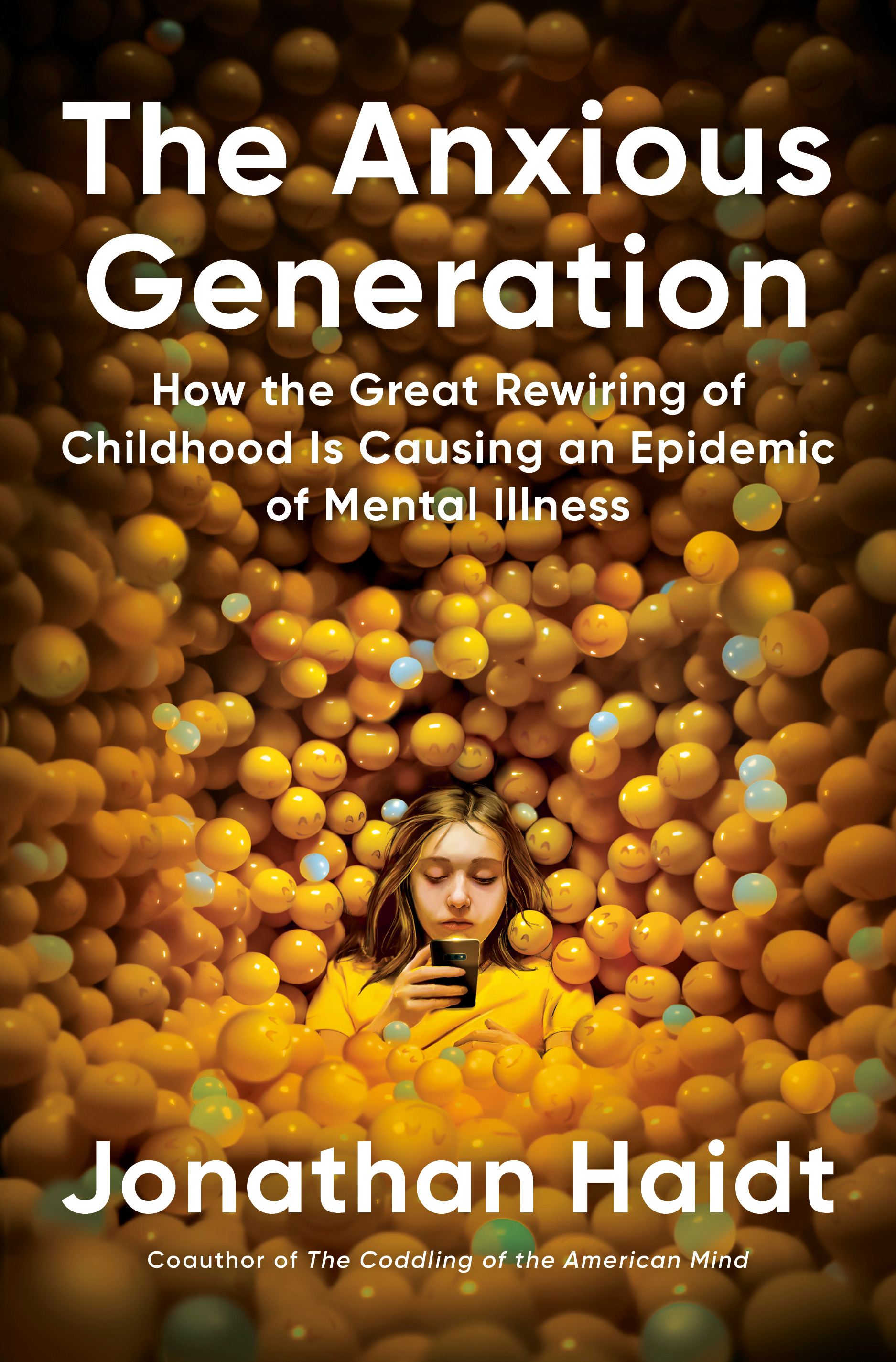
Book Blog #413: The Anxious Generation by Jonathan Haidt


Title: The Anxious Generation

Author: Jonathan Haidt

# of Pages: 295 (hardback)

Genre: Nonfiction, Psychology, Self-help

Rating: ★★☆☆☆

Synopsis: After more than a decade of stability or improvement, the mental health of adolescents plunged in the early 2010s. Rates of depression, anxiety, self-harm, and suicide rose sharply, more than doubling on many measures. Why? In The Anxious Generation, social psychologist Jonathan Haidt lays out the facts about the epidemic of teen mental illness that hit many countries at the same time. He then investigates the nature of childhood, including why children need play and independent exploration to mature into competent, thriving adults. Haidt shows how the play-based childhood began to decline in the 1980s, and how it was finally wiped out by the arrival of the phone-based childhood in the early 2010s. He presents more than a dozen mechanisms by which this great rewiring of childhood has interfered with children’s social and neurological development, covering everything from sleep deprivation to attention fragmentation, addiction, loneliness, social contagion, social comparison, and perfectionism. He explains why social media damages girls more than boys and why boys have been withdrawing from the real world into the virtual world, with disastrous consequences for themselves, their families, and their societies. Most important, Haidt issues a clear call to action. He diagnoses the collective action problems that trap us, and then proposes four simple rules that might set us free. He describes steps that parents, teachers, schools, tech companies, and governments can take to end the epidemic of mental illness and restore a more humane childhood.

Review: It's extremely apparent from this book that Jonathan Haidt is a boomer.

Y'know how children joke about their grandparents being overly nostalgic over the past and being convinced that things were better "back in the day"? The Anxious Generation is basically that but in essay format. The TLDR is that social media and screen time is bad is excess and largely influenced by the culture of "everyone" being online. None of these points were particularly novel and follow common sense. 

While I was hooked by the books opener, Parts 1 and 2 were a bit drier. This is when I discovered that the books format was going to be more essay-format; many study citations and data driven assertions (which is good although some studies were older than I expected to be used in this relatively recently published book). The highlight of these sections were how Haidt emphasizes antifragility and its importance that children develop it (this is a takeaway that's value for even adults who are looking to continue to grow).

The chapters in Part 3 were when it became more interesting, especially in Chapter 6: Why Social Media Harms Girls More Than Boys. Haidt highlights sociogenic illness (social media promotes the propagation of an illness from influencers to their followers). This is a phenomenon that many have likely seen (rise of influencers with Tourettes or multi-personality disorder) which is met with online discourse over whether said influencers are faking their illnesses/disorders. I was shocked to see that this was a tangible, observed trend from medical professionals as well. This chapter also (more controversially) highlights that this also might apply to the lgbtq community.

Unfortunately Part 3 also contains the worst chapter. Chapter 8: Spiritual Elevation and Degradation excited me at first because Haidt begins it by saying he wants to write the chapter "less as a social scientist than as a fellow human being who has felt overwhelmed, personally and perpetually, since 2014" (p.199). This is how I wanted him to write the whole book; less like an essay and more as a heart to heart from someone with deeper knowledge on social media's impact who could make it more understandable in a practical way! However, this chapter instead covers an agnostic view on spirituality, covering some topics related to inner peace drawing from some high level lessons from actual religions. This chapter didn't resonate with me at all and could've been cut completely. 

I was also pretty disappointed with Chapter 7: What Is Happening to Boys?, which handwaves its way through only two negative areas: pornography and video games. The TLDR for both is that addiction to either negatively impacts boys, which is also common sense and so much weaker of a revelation than what Haidt asserts for girls. 

It was disappointing that Haidt only includes one line on what I would hypothesis is the bigger negative impact for boys; them getting sucked into the manosphere and influenced by harmful ideologies: “Without positive male role models in their lives, many boys turn online for guidance, where they are easily led down rabbit holes into online communities that may radicalize their thinking” (p.262). This line isn't even include in this chapter; it's include in the latter half of Part 4. This is a topic that came up in the Netflix mini-series Adolescence last year, so I was expecting Haidt to have at least acknowledged this hypothesis and included some research on whether there is some correlation between boy's social media use and incel culture. 

Overall I didn't consider this worth the read. Many non-fiction books feel like they could have been an email instead unless you are in academia; this book is no exception. It could have been more well rounded; Haidt would sound less like a boomer if he focused less on going "back" to play-based childhood and leaned more into a holistic evaluation of social media/technology to highlight how parents and children can be empowered by it (to better drive home his calls to action in the new hybrid of play and phone based childhoods).