Sunday, September 27, 2026

Book Blog #417: Love, Theoretically by Ali Hazelwood

Title:  Love, Theoretically
Author: Ali Hazelwood
# of Pages: 384 (paperback)
Genre: Adult, Romance, Contemporary
Rating: ★★★☆☆
Synopsis: The many lives of theoretical physicist Elsie Hannaway have finally caught up with her. By day, she’s an adjunct professor, toiling away at grading labs and teaching thermodynamics in the hopes of landing tenure. By other day, Elsie makes up for her non-existent paycheck by offering her services as a fake girlfriend, tapping into her expertly honed people pleasing skills to embody whichever version of herself the client needs. Honestly, it’s a pretty sweet gig—until her carefully constructed Elsie-verse comes crashing down. Because Jack Smith, the annoyingly attractive and broody older brother of her favorite client, turns out to be the cold-hearted experimental physicist who ruined her mentor’s career and undermined the reputation of theorists everywhere. And that same Jack who now sits on the hiring committee at MIT, right between Elsie and her dream job. Elsie is prepared for an all-out war of scholarly sabotage but…those long, penetrating looks? Not having to be anything other than her true self when she’s with him? Will falling into an experimentalist’s orbit finally tempt her to put her most guarded theories on love into practice?
Review: High 3 stars! An enjoyable read for the genre.
The author isn't doing anything revolutionary here; an academia-related romance where the main conflicts can be traced back to bad assumptions and miscommunication are not far off from what Hazelwood already did in Love Hypothesis. Love, Theoretically is basically the less comedic version.
As per typical romance books, it appeals to classic women fantasies in men: for them to be caring (and maybe overly concerned about their well being), for men to be able to read their minds (aka know women's needs without having to be a direct communicator), and of course for them to be tall and strong. Elsie is of course the damsel in distress while also being a smart, hard working physicist. Jack Smith, unsurprisingly, is the fantasy.
I loved the yearning but overall the (predictable) plot was a bit slow that made the book somewhat put-down-able. The last third of the book was actually my least favorite and felt like Hazelwood got distracted writing the smutty romance part and the open plot points were an after thought that were rapidly wrapped up at the end. 
It's also painfully clear Hazelwood is projecting her interests onto these characters. There's way too many Twilight mentions (reminds me of As the Lemon Trees Grow and all the Studio Ghibli shout outs). From reading Bride and Mate, it's pretty clear why fanfiction and the omegaverse got a mention by the main character too.
Overall an entertaining read for a romance, would recommend it for people who are interesting in the genre and are able to not take the story too seriously. 

Sunday, September 20, 2026

Book Blog #416: The Leavers by Lisa Ko


Title: The Leavers

Author: Lisa Ko

# of Pages: 335 (paperback)

Genre: Adult, Contemporary

Rating: ★★☆☆☆

Synopsis: One morning, Deming Guo’s mother, an undocumented Chinese immigrant named Polly, goes to her job at the nail salon and never comes home. No one can find any trace of her. With his mother gone, eleven-year-old Deming is left with no one to care for him. He is eventually adopted by two white college professors who move him from the Bronx to a small town upstate. They rename him Daniel Wilkinson in their efforts to make him over into their version of an “all-American boy.” But far away from all he’s ever known, Daniel struggles to reconcile his new life with his mother’s disappearance and the memories of the family and community he left behind. Set in New York and China, The Leavers is a vivid and moving examination of borders and belonging. It’s the story of how one boy comes into his own when everything he’s loved has been taken away--and how a mother learns to live with the mistakes of her past.

Review: I just couldn't get into this book.

Deming's and his mother Polly's stories are actually pretty interesting. Polly's story reads as historical fiction and delves into the perspective of what it's like to grow up in rural China and become and undocumented Chinese immigrant. Deming's story is what it's like to be the son of said immigrant and struggle with feelings of identity and belonging in white suburban America. 

However, the execution is weak; I couldn't help but wonder if this would have been a 3 or 4 star read at least if it was written by an author who was a stronger storyteller. The story is told in a hodgepodge of Deming's third person and Polly's first person perspectives that skip around between the past and present. It was hard to be invested in their stories with these constant changes, which were clearly used to beat around the bush of addressing why Polly suddenly disappeared. 

Most of the story was really slow, literary but without impressive prose that I would expect from novels that are more "slice of life" than plot focused. This also meant I was not emotionally invested in either of their stories until closer to the ending. The last 100 pages were the best because it dug deeper into Polly's experiences as an undocumented immigrant, and the conclusion of Deiming's story is what digs into the core message of identity and belonging.

It seems intentional that Polly comes off as a narcissistic mother. While it's great to have nuanced, imperfect characters, I wish the author actually made her a bit more likable/redeemable because her chain of bad decisions made it hard to be sympathetic toward her most of the time. Her life experiences are compelling and feel mostly realistic, but I wish Polly was more introspective on the clash between her fierce independence and societal obligations to be a selfless mother. (This also drove home how important it is for people to learn about contraceptives, family planning/resources, financial planning, etc.)

The Chinese American experience of growing up in white suburbia is a story that just wasn't that interesting to me, probably a symptom of being a decent story that's read at the wrong time. I've also read/watched/heard about many similar stories (the first one that comes to mind is American Born Chinese), so this aspect of the story didn't feel very novel to me. 

Overall not a bad book, but I wouldn't recommend it in a hurry. While it's thought provoking, there are other more more compelling storytellers that will cover some of the same topics.

Monday, September 14, 2026

Book Blog #415: As Long As the Lemon Trees Grow by Zoulfa Katouh


Title: As Long as the Lemon Trees Grow

Author: Zoulfa Katouh

# of Pages: 400 (paperback)

Genre: YA, Historical Fiction, Romance

Rating: ★★★☆☆

Synopsis: Salama Kassab was a pharmacy student when the cries for freedom broke out in Syria. She still had her parents and her big brother; she still had her home. She had a normal teenager’s life. Now Salama volunteers at a hospital in Homs, helping the wounded who flood through the doors daily. Secretly, though, she is desperate to find a way out of her beloved country before her sister-in-law, Layla, gives birth. So desperate, that she has manifested a physical embodiment of her fear in the form of her imagined companion, Khawf, who haunts her every move in an effort to keep her safe. But even with Khawf pressing her to leave, Salama is torn between her loyalty to her country and her conviction to survive. Salama must contend with bullets and bombs, military assaults, and her shifting sense of morality before she might finally breathe free. And when she crosses paths with the boy she was supposed to meet one fateful day, she starts to doubt her resolve in leaving home at all. Soon, Salama must learn to see the events around her for what they truly are—not a war, but a revolution—and decide how she, too, will cry for Syria’s freedom.

Review: 3 stars, approaching 4 stars.

I liked this book more than I was expecting. I didn't know very much about Syria nor even it's more recent history. As Long as the Lemon Trees Grows gives a small window into the perspective of Syrian refugees, although the story would've benefitted from diving deeper into the revolution and motivations/history.

Much of the book, especially the beginning half, felt slow and repetitive (mostly showing how dangerous and horrific it was to live in Syria). There were also way too many Studio Ghibli/Miyazaki shout outs (the main characters really appreciate Miyazaki's films, and based on the dedication at the beginning of the book, this is the author Kaouh's own love for his films). It felt really random that Miyazaki was the only animated filmmaker getting mentioned consistently throughout this book, and repeatedly mentioning the characters' love for his work seemed like a shallow way to "develop" these characters. 

The last ~100 pages were the best and were almost in 4 star territory. I was much more invested in seeing how the story would play out and was shocked/holding my breathing during major events. 

Overall, not a bad book. It read like a YA; easy to read, no dense, literary descriptions, and first love!

Saturday, September 12, 2026

Book Blog #414: Taipei Story by R.F. Kuang


Title: Taipei Story

Author: R.F. Kuang

# of Pages: 279 (ebook)

Genre: Adult, Contemporary, Memoir

Rating: ★☆☆☆☆

Synopsis: College freshman Lily Chen is off to spend the summer in Taipei at an intensive language program like so many Chinese American students before her, hoping to connect with the culture she inherited but never fully understood. But a promising start quickly unravels. Her classes are grueling, her roommate is driving her insane, and a reckless trip to the hot springs with a guy she barely knows soon has her classmates viciously gossiping. She feels adrift, a foreigner in a country she thought would feel like home. Then shocking news Lily’s grandfather has passed away. The loss forces her to grapple with now-unanswerable questions about her family history. As Lily grieves, she’s drawn into a journey of self-discovery—piecing together memories, stories, and silences over a series of hilarious and devastating attempts at connection. Taipei Story What if the diaspora fantasy of homecoming never comes true? What if learning a language can’t bring you any closer to the people you’re trying to reach? What if you search for your family’s history, but your family doesn’t want to share? What if you wait too long to ask the right questions? As Lily struggles for answers, her summer becomes a poignant search for understanding—of herself, her family, and the meaning of home.

Review: If you must read Taipei Story, read it from the perspective that it's a memoir and NOT an original fictional story.

I didn't know this going in and was shocked later to hear the same "plot points" repeated in R.F. Kuang's interview where she talks and her and her family's real life experiences. Knowing this actually explained so much, such as why R.F. Kuang overly-eager (yet somewhat narcissistic) way of speaking showed through so much more in this work compare to her others. 

If Kuang was more upfront about this (I double checked the synopsis, for notes in the front, but nothing indicated that this was heavily based off of her real life), I would consider rating this upwards toward 3 starts for it as a memoir. She is very accurate at writing about how she sees herself, and I wouldn't have to consider her character development and plot craftsmanship because she'd get more points for being open and honest about her actual experiences. 

But alas it's not, so I will judge it as a stand alone fiction. Mild spoilers ahead about themes, overarching issues, etc.

Part 1 (first half of the book): Slow, Taipei-based slice of life, no apparent plot

A lot of this book is just ramblings about Taipei and nerding out about the Chinese language and literature. There were so many unnecessarily and repetitive food mentions (we get it, you like tofu pudding) that it made me think Kuang went to Taipei, meticulously planned a trip, and came back with no one willing to listen to all her food adventures. Thus the poor saps who pick up this book are forced to read about it. 

With all the woman-splaining of Chinese language phases, I thought Kuang's target audience would be those who aren't familiar with Chinese culture at all. I expected the main character Lily, a Chinese American girl, to be the relatable protagonist who suddenly gets exposure niche Taiwanese literature and phrases. Instead, Lily is somehow already pretty well versed and takes the time to explain to reader everything she already knows about a particular author anytime one comes up (which I now suspect is Kuang gushing over authors she either likes or heavily researched and wants to show off). 

Lily's characterization was pretty weak until you realize that Kuang is self-inserting. Even from early as page 6, she says the following without any strong development of Lily's goals/aspirations:

"I had spent a lot of time thinking about what it meant to be a female author who wanted critical acclaim and also to look pretty" (p.6)

Not only is she incredible self involved, she is extremely nerdy; way nerdier than the average person with some benign hot takes:

"New textbooks always gave me a little masochistic thrill. I liked the weight of them. I liked previewing all the things I didn't know. It made me excited about the amount of work to be done" (p.21). 

She also has under-developed relationships with other characters that I wouldn't considered fleshed out by the end of the book. This includes her friendship with Ana (no clear resolution to conflicts in their relationships) and her familial relationship with her grandfather (how can she claim to be learning Chinese to better communicate with him if she previously wasn't putting in the effort to try to interact with him regularly?). Most the problems she encounters in her story are related to her poor communication, which is always frustrating to read about. 

Part 2 (second half of the book): Family trauma that has nothing to do with the main character

"My grief was not that special...Ask around and every first-, second-, even third-generation Asian American"

A big focus in the latter half of the book is about Lily's family history and highlighting horrors of genocide. Since Lily is so self-involved she decides that she is entitled to know about this trauma and that it somehow effects her (despite her having a pretty privileged life as a Ivy school American and no strong argument of generational trauma). 

"I couldn't get a grip on the idea that this happened to my own family - that this chapter of history, which never made it onto any of my high school or college syllabi, was involved with me in any way" (p. 196). 

Instead of taking some lessons from her family's past to either raise awareness on similar genocidal current events or something else that would be productive in a way that's bigger than herself, it seems like Lily is more aghast that she didn't get a chance to incorporate this in her identity and wants to check some "good daughter" box by belated asking her parents about their backstory. 

"I had always imagined my parents would be pleased at my attempts to reconnect - that they had been waiting all these years for any one of their children to tkae an interest in our culture and our past...I thought I'd be rewarded for caring" (p.210).

Of course, the moral of this arc is that the trauma her parents and grandparents went through don't have anything to do with her, and that she needs to accept that. However, this didn't come off as a major learning; readers likely already have this perspective from the start of hearing Lily's story, so it's confusing why Lily comes to this realization so late. 

Overall, Lily comes off as a self-centered, privileged girl who isn't worth reading about. Kuang is clearly introspecting about her own life, but her life lessons are not relatable to most audiences (maybe a very specific niche of Chinese Americans, who are also self-centered and bad at communicating). 

It's not even clear to me if Lily/Kuang actually grew in meaningful ways; she still yearns for an identity that isn't necessarily hers to have (being authentically Taiwanese/Chinese) and only focused on understanding herself rather than understanding others and being compassionate. 

I wouldn't recommend this book.

Monday, September 7, 2026

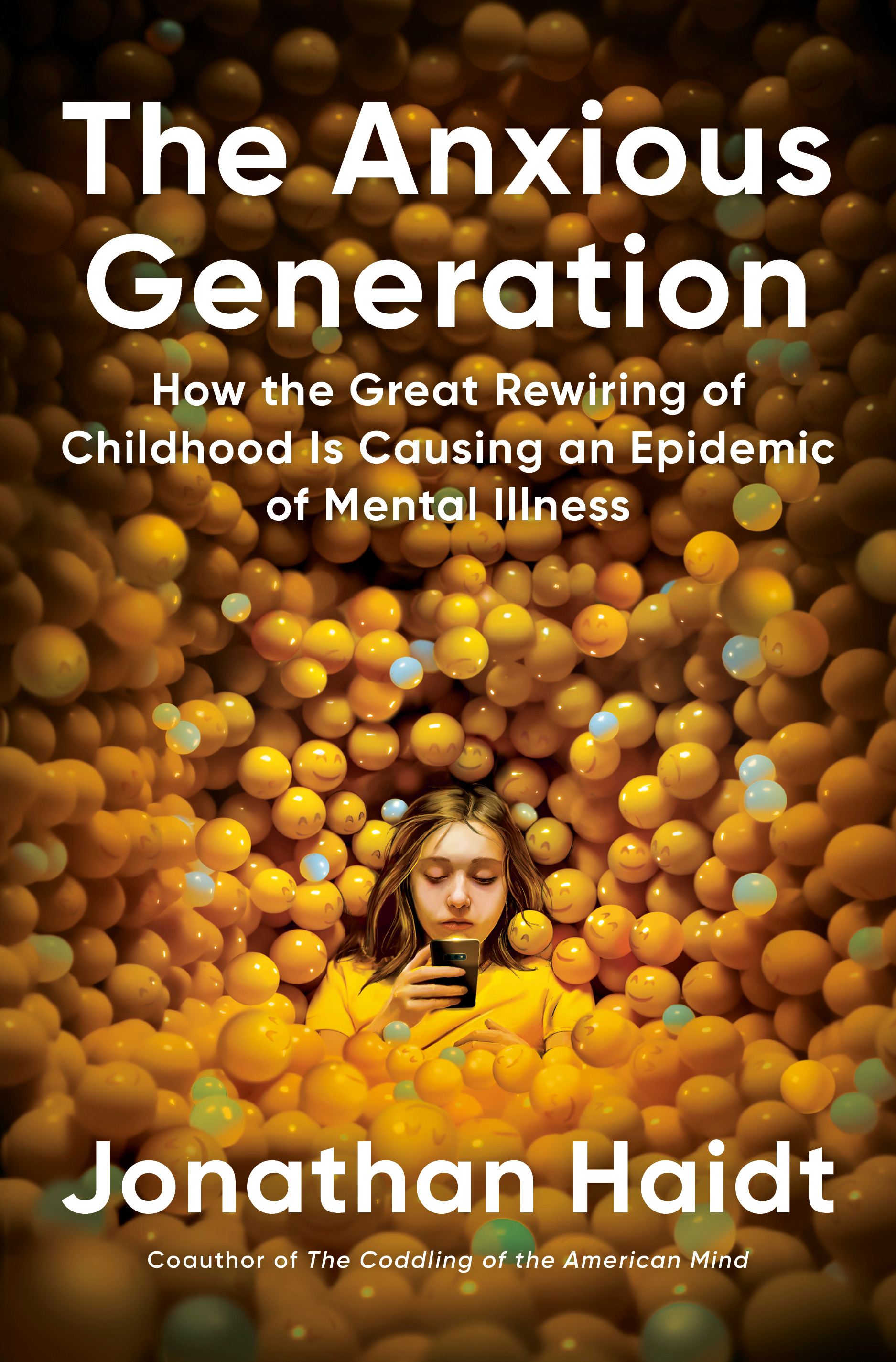
Book Blog #413: The Anxious Generation by Jonathan Haidt


Title: The Anxious Generation

Author: Jonathan Haidt

# of Pages: 295 (hardback)

Genre: Nonfiction, Psychology, Self-help

Rating: ★★☆☆☆

Synopsis: After more than a decade of stability or improvement, the mental health of adolescents plunged in the early 2010s. Rates of depression, anxiety, self-harm, and suicide rose sharply, more than doubling on many measures. Why? In The Anxious Generation, social psychologist Jonathan Haidt lays out the facts about the epidemic of teen mental illness that hit many countries at the same time. He then investigates the nature of childhood, including why children need play and independent exploration to mature into competent, thriving adults. Haidt shows how the play-based childhood began to decline in the 1980s, and how it was finally wiped out by the arrival of the phone-based childhood in the early 2010s. He presents more than a dozen mechanisms by which this great rewiring of childhood has interfered with children’s social and neurological development, covering everything from sleep deprivation to attention fragmentation, addiction, loneliness, social contagion, social comparison, and perfectionism. He explains why social media damages girls more than boys and why boys have been withdrawing from the real world into the virtual world, with disastrous consequences for themselves, their families, and their societies. Most important, Haidt issues a clear call to action. He diagnoses the collective action problems that trap us, and then proposes four simple rules that might set us free. He describes steps that parents, teachers, schools, tech companies, and governments can take to end the epidemic of mental illness and restore a more humane childhood.

Review: It's extremely apparent from this book that Jonathan Haidt is a boomer.

Y'know how children joke about their grandparents being overly nostalgic over the past and being convinced that things were better "back in the day"? The Anxious Generation is basically that but in essay format. The TLDR is that social media and screen time is bad is excess and largely influenced by the culture of "everyone" being online. None of these points were particularly novel and follow common sense. 

While I was hooked by the books opener, Parts 1 and 2 were a bit drier. This is when I discovered that the books format was going to be more essay-format; many study citations and data driven assertions (which is good although some studies were older than I expected to be used in this relatively recently published book). The highlight of these sections were how Haidt emphasizes antifragility and its importance that children develop it (this is a takeaway that's value for even adults who are looking to continue to grow).

The chapters in Part 3 were when it became more interesting, especially in Chapter 6: Why Social Media Harms Girls More Than Boys. Haidt highlights sociogenic illness (social media promotes the propagation of an illness from influencers to their followers). This is a phenomenon that many have likely seen (rise of influencers with Tourettes or multi-personality disorder) which is met with online discourse over whether said influencers are faking their illnesses/disorders. I was shocked to see that this was a tangible, observed trend from medical professionals as well. This chapter also (more controversially) highlights that this also might apply to the lgbtq community.

Unfortunately Part 3 also contains the worst chapter. Chapter 8: Spiritual Elevation and Degradation excited me at first because Haidt begins it by saying he wants to write the chapter "less as a social scientist than as a fellow human being who has felt overwhelmed, personally and perpetually, since 2014" (p.199). This is how I wanted him to write the whole book; less like an essay and more as a heart to heart from someone with deeper knowledge on social media's impact who could make it more understandable in a practical way! However, this chapter instead covers an agnostic view on spirituality, covering some topics related to inner peace drawing from some high level lessons from actual religions. This chapter didn't resonate with me at all and could've been cut completely. 

I was also pretty disappointed with Chapter 7: What Is Happening to Boys?, which handwaves its way through only two negative areas: pornography and video games. The TLDR for both is that addiction to either negatively impacts boys, which is also common sense and so much weaker of a revelation than what Haidt asserts for girls. 

It was disappointing that Haidt only includes one line on what I would hypothesis is the bigger negative impact for boys; them getting sucked into the manosphere and influenced by harmful ideologies: “Without positive male role models in their lives, many boys turn online for guidance, where they are easily led down rabbit holes into online communities that may radicalize their thinking” (p.262). This line isn't even include in this chapter; it's include in the latter half of Part 4. This is a topic that came up in the Netflix mini-series Adolescence last year, so I was expecting Haidt to have at least acknowledged this hypothesis and included some research on whether there is some correlation between boy's social media use and incel culture. 

Overall I didn't consider this worth the read. Many non-fiction books feel like they could have been an email instead unless you are in academia; this book is no exception. It could have been more well rounded; Haidt would sound less like a boomer if he focused less on going "back" to play-based childhood and leaned more into a holistic evaluation of social media/technology to highlight how parents and children can be empowered by it (to better drive home his calls to action in the new hybrid of play and phone based childhoods). 

Monday, August 31, 2026

Book Blog #412: 11/22/63 by Stephen King


Title: 11/22/63

Author: Stephen King

# of Pages: 1080 (ebook)

Genre: Adult, Historical Fiction, Science Fiction

Rating: ★★☆☆☆

Synopsis: On November 22, 1963, three shots rang out in Dallas, President Kennedy died, and the world changed. What if you could change it back? Stephen King’s heart-stoppingly dramatic new novel is about a man who travels back in time to prevent the JFK assassination—a thousand page tour de force. Following his massively successful novel Under the Dome, King sweeps readers back in time to another moment—a real life moment—when everything went wrong: the JFK assassination. And he introduces readers to a character who has the power to change the course of history. Jake Epping is a thirty-five-year-old high school English teacher in Lisbon Falls, Maine, who makes extra money teaching adults in the GED program. He receives an essay from one of the students—a gruesome, harrowing first person story about the night 50 years ago when Harry Dunning’s father came home and killed his mother, his sister, and his brother with a hammer. Harry escaped with a smashed leg, as evidenced by his crooked walk. Not much later, Jake’s friend Al, who runs the local diner, divulges a secret: his storeroom is a portal to 1958. He enlists Jake on an insane—and insanely possible—mission to try to prevent the Kennedy assassination. So begins Jake’s new life as George Amberson and his new world of Elvis and JFK, of big American cars and sock hops, of a troubled loner named Lee Harvey Oswald and a beautiful high school librarian named Sadie Dunhill, who becomes the love of Jake’s life – a life that transgresses all the normal rules of time.

Review: This book has no business being as long as it is. There are multiple story arcs that easily could have been individual books in a series (which also would have given me excuse to stop reading after first story arc...). 

In retrospect, I probably should have DNF'd this one instead of pushing through. While the story did get better as it approached the grande finale of JFK's assassination, King's editor should have pushed harder to make this story more concise. Some story arcs are completely unrelated to the primary plot (where the tie in is so loose that it could have just not existed in the first place). He actually wastes so much time on all these story arcs that he doesn't ever fully flesh out the science fiction part of how this time travel is possible in the first place (and this is even after the reader has to slog through exposition in the beginning that "sets the stage" for time travel in the first place). 

One of these tangential story arcs is Jake's love life with Sadie during his time travels. This was actually the arc that felt the most disconnected; a parallel story that was for Jake's personal enjoyment that doesn't benefit Jake's task to save JFK's life. Some scenes are repetitive, and reading romance from the male perspective gave me the ick sometimes (how many times is he going to mention thinking about holding her boob?). However, if their love story were told in isolation, King could have written a decent romance novel. 

King must really love this era because he focuses on some of the nicer aspects; how great the root beer tastes, how cheap the cool "vintage" cars are. While he does in passing mention the bad parts (racial segregation, lack of civil rights, conservative views on romantic relationships), he mentions how great Jake is at the Lindy Hop much more (way too much for my liking). Although King did a good job researching the 1950s and 60s, I'm not a huge fan nor nostalgic for that era. 

If you want to read a book about a character that fulfills the male fantasy (over 6 feet tall, white knight) and love the 1950s and 60s, this is the book for you. If you're looking for a plot-focused novel or crazy twists, this one is not for you (since the narrative is told as if he's writing a manuscript, Jake will often strongly hint on what's to come, so everything was pretty predictable). 

Monday, August 17, 2026

Book Blog #411: Strangers: A Memoir of Marriage by Belle Burden


Title: Strangers: A Memoir of Marriage

Author: Belle Burden

# of Pages: 239 (ebook)

Genre: Nonfiction, Biography

Rating: ★★★★☆

Synopsis: In March 2020, Belle Burden was safe and secure with her family at their house on Martha’s Vineyard, navigating the early days of the pandemic together—building fires in the late afternoons, drinking whisky sours, making roast chicken. Then, with no warning or explanation, her husband of twenty years announced that he was leaving her. Overnight, her caring, steady partner became a man she hardly recognized. He exited his life with her like an actor shrugging off a costume. In Strangers, Burden revisits her marriage, searching for clues that her husband was not who she always thought he was. As she examines her relationship through a new lens, she reckons with her own family history and the lessons she intuited about how a woman is expected to behave in the face of betrayal. Through all of it, she is transformed. The discreet, compliant woman she once was—someone nicknamed “Belle the Good”—gives way to someone braver, someone determined to use her voice.

Review: First, a note on privilege:

A quick search online makes it clear that Belle Burden comes from a very privileged background. She's from generational wealth and is still a highly accomplished woman despite her career taking a backseat in her marriage.

As someone who is NOT one of the ultra-rich, I went into reading this book bracing to have to listen to complaints about problems that wouldn't be relatable. Any financial issues she has won't seem as dire when her family is such a strong support system (not to mention how many trust funds she might actually have). Once again, it all connects back to Burden being extremely privileged. 

So why did I give Strangers 4 stars?

Here's what helped me enjoy this book: while Burden doesn't capture the full picture of her privilege, she's not hiding it. It's very clear that she is from a family of socialites and that her family/life style is of someone very well off. Divorce nothing unique, but having a divorce after being married so long (20 years) AND the suddenness of the separation AND that it was during a socially difficult period (in the middle of the COVID pandemic) made this story stand out. 

The first part of the book hooks the reader in; Burden describes how she is blindsided by her now ex-husband ("James") when he suddenly leaves her and their family despite being in a seemingly happy marriage. I felt so angry on Burden's behalf even if you strip away that she's an unreliable narrator; his unfaithfulness to her and his poor communication to her over why he's divorcing her are undeniable marks against him. This first part alone is a bulk of why this book is 4 stars.

Although many might not be sympathetic to the financial-aspect of Burden's divorce struggle, there's still some meaningful takeaways that apply to people of all income brackets. Financial complacency can put you at the mercy of your ex during a divorce. Prenups should not be a "one and done" agreement, especially as career and family responsibilities shift over time. These lessons aren't particularly unique to Burden's story but are a painful reminder, especially for long term couples who got married during a less progressive time for women.

Overall this was a generally good read, despite it's flaws. Since I haven't read many stories about divorce, this one was particularly interesting, but others might be bored by a story that covers common divorce issues and doesn't get to a clear answer on why "James" actually walked out on their family.

Thursday, August 13, 2026

Book Blog #410: Ugly Love by Colleen Hoover


Title: Ugly Love

Author: Colleen Hoover

# of Pages: 323 (ebook)

Genre: Adult, Romance, Contemporary

Rating: ★★★☆☆

Synopsis: When Tate Collins meets airline pilot Miles Archer, she knows it isn’t love at first sight. They wouldn’t even go so far as to consider themselves friends. The only thing Tate and Miles have in common is an undeniable mutual attraction. Once their desires are out in the open, they realize they have the perfect set-up. He doesn’t want love, she doesn’t have time for love, so that just leaves the sex. Their arrangement could be surprisingly seamless, as long as Tate can stick to the only two rules Miles has for her. Never ask about the past. Don’t expect a future. They think they can handle it, but realize almost immediately they can’t handle it at all.

Review: An easy read for people who enjoy their romance with tension, bad communication, and baggage!

Ugly Love follows a similar story arch as Maybe Someday (just replace the song writing sessions with sex, and take out the cheating). I definitely could enjoy the main characters in this one more despite their flaws (Tate being so submissive she's a pushover, Miles needing therapy and being overbearing).

There's first person POV switching, but it didn't really bother me this time because the chapters for both Miles and Tate were pretty engaging. The downside of Tate's chapters were that they mostly focused on repetitive sex scenes vs Mile's POV was written like Milk and Honey style poetry but dumbed down to a wispy child's mentality. 

Hoover also does a great job at writing male main characters who give me the ick for one reason or another (makes me wonder what men in her life inspire such problematic male characters). Miles is better than Ridge, but I had a hard time cheering for his relationship with Tate because of his unresolved baggage he displaced on her. 

Overall a decent read for an accessible romance book. Scratched my itch for romance read!

Monday, August 10, 2026

Book Blog #409: The Burning God by R.F. Kuang


Title: The Burning God

Author: R.F. Kuang

# of Pages: 619 (ebook)

Genre: YA, Fantasy, Historical Fiction

Rating: ★★☆☆☆

Synopsis: After saving her nation of Nikan from foreign invaders and battling the evil Empress Su Daji in a brutal civil war, Fang Runin was betrayed by allies and left for dead. Despite her losses, Rin hasn’t given up on those for whom she has sacrificed so much—the people of the southern provinces and especially Tikany, the village that is her home. Returning to her roots, Rin meets difficult challenges—and unexpected opportunities. While her new allies in the Southern Coalition leadership are sly and untrustworthy, Rin quickly realizes that the real power in Nikan lies with the millions of common people who thirst for vengeance and revere her as a goddess of salvation. Backed by the masses and her Southern Army, Rin will use every weapon to defeat the Dragon Republic, the colonizing Hesperians, and all who threaten the shamanic arts and their practitioners. As her power and influence grows, though, will she be strong enough to resist the Phoenix’s intoxicating voice urging her to burn the world and everything in it?

Review: This one is about as good as the previous book; high two stars to low three stars.

I was definitely more hooked at the end of The Dragon Republic compared to the ending of this book. However, I was more consistently engaged with The Burning God's story.

It's obvious Kuang has gotten better at story building throughout this series. She started narrowing the focus on the main trio in The Dragon Republic: Rin, Nezha, and Kitay. She continues this focus in The Burning God which makes it a lot easier to be invested in these characters. 

There's still plenty of flaw though. Some historical events dragged the plot (e.g. long army marches in dire conditions with no obvious contribution to driving the story forward), and some fantasy aspects weren't fully fleshed out (e.g. how do hamanistic power and Hesperian technological innovation measure up to each other, and how do you explain when someone overpowered is defeated by the other?). Characters are introduced only to live long enough to be a plot device and are killed off just as the readers is about ready to be invested in them.

Rin developed a bit more into be more power hungry and bloodthirsty....but also continues to be frustratingly immature and horny. She's not someone who I can love to hate nor is she some who I can respect for being logical or having a strong set of morals (she has always been wishy washy with what she cares about and believes in).

This is actually one of the few books/series that I've read where I've considered that it might have been better told from alternating perspectives: from Kitay's or Nezha's POV. I'm not sure where that would place Rin though since then she'd just be an extremely annoying character who rises to power from a lot of luck. 

Overall this series isn't worth the effort it takes to get through this triology (since these three books are also each on the longer side). The second and third books were definitely better than the first, but none of them were page turners. It felt like this was a series that needed to be reworked with a storyboard for all three books and more focus on fully developing the fantasy elements and important characters. 

Friday, July 31, 2026

Book Blog #408: Maybe Someday by Colleen Hoover


Title: Maybe Someday
Author: Colleen Hoover
# of Pages: 367 (paperback)
Genre: Adult, Romance, Contemporary
Rating: ★☆☆☆☆
Synopsis: At twenty-two years old, Sydney has a great life: She's in college, working a steady job, in love with her wonderful boyfriend, Hunter, and rooming with her best friend, Tori. But everything changes when she discovers Hunter's cheating on her--and she is left trying to decide what to do next. Sydney becomes captivated by Ridge, her mysterious neighbor. She can't take her eyes off him or stop listening to the passionate way he plays his guitar every evening out on his balcony. And there's something about Sydney that Ridge can't ignore, either. When their inevitable encounter happens, they soon find themselves needing each other in more ways than one...
Review: This one can go in the trash with all the other "romance" books that glorify cheating.
Maybe Someday tries to tout two main messages: "love has no boundaries" and "even if you cannot control how you feel, you can control how you act." However, Sydney and Ridge's relationship is a TERRIBLE example of both of these things. 

Ridge is a horrible person. Sydney wants others to recognize him as an honest man who works hard to maintain integrity in his relationships when he LITERALLY makes untactful jokes and doesn't seem to have respect for his other romantic relationship. Red flags everywhere. 

Sydney's perspective (because yes, there's first person POV switching) is what I imagine Ariana Grande's internal dialogue must have been like when she got with Ethan Slater. "Yes, he's in a relationship, but the undeniable love between us and our shared passion for our craft overcomes all (even though we know better)!"

Not attached to any of these characters who seem more like caricatures than real people. I was not excited about Ridge and Sydney's love story and thought it was not a story worth telling.

Sunday, July 26, 2026

Book Blog #407: The Dragon Republic by R.F. Kuang


Title: The Dragon Republic

Author: R.F. Kuang

# of Pages: 654 (ebook)

Genre: YA, Historical Fiction

Rating: ★★☆☆☆

Synopsis: In the aftermath of the Third Poppy War, shaman and warrior Rin is on the run: haunted by the atrocity she committed to end the war, addicted to opium, and hiding from the murderous commands of her vengeful god, the fiery Phoenix. Her only reason for living is to get revenge on the traitorous Empress who sold out Nikan to their enemies. With no other options, Rin joins forces with the powerful Dragon Warlord, who has a plan to conquer Nikan, unseat the Empress, and create a new Republic. Rin throws herself into his war. After all, making war is all she knows how to do. But the Empress is a more powerful foe than she appears, and the Dragon Warlord’s motivations are not as democratic as they seem. The more Rin learns, the more she fears her love for Nikan will drive her away from every ally and lead her to rely more and more on the Phoenix’s deadly power. Because there is nothing she won’t sacrifice for her country and her vengeance

Review: Slightly better than the first book, but not by much.

Major downside, this one is longer which means suffering longer through this story. If it takes me 300 pages to even get into the story, there's no way the book is getting 3+ stars.

My main gripes with this sequel continue to be with the character development and the plot.

Rin is still unlikable. Although her not having a clear motivation might actually be an intentional conflict in both books 1 and 2 and could justify poor big-picture decision making, her smaller-scale decision making sucks and is frustrating to read about. She's like when a movie's Rotten Tomato rating is a 6.0; not good but also not bad enough to love to hate.

I was happy to see some returning characters who I enjoyed reading about in book 1 (or at the very least enjoyed more than Rin). 


However, I have major gripes with their characterization. For example, Rin is supposed to have close relationships with some of the people, but the only reason why the reader knows is because of explicit verbal declarations of love rather than Kuang writing in scenes that build characters' emotional connection.

A lot of supporting characters are clearly just plot devices, and it shows. My theory is that Kuang wrote in too many characters in book 1 and realized she had to do some culling of her own once they served their purpose.


Although I continue to not know much about the historical events that this series is based off of, it's way too clear that Kuang has some goal in mind that she's trying to reach and/or a historical framework that she's trying to mold the story into.  


If you enjoyed the first book then you should keep reading the second. I am not in that boat, and the first half was definitely 2 star material. The last 200 pages were actually somewhat entertaining despite the flaws, which might've actually put it into low 3 star territory if Kuang was better and tying this whole story together. 

Thursday, July 16, 2026

Book Blog #406: Whistler by Ann Patchett


Title: Whistler

Author: Ann Patchett

# of Pages: 296 (ebook)

Genre: Adult, Contemporary

Rating: ★★★☆☆

Synopsis: When Daphne Fuller and her husband Jonathan visit the Metropolitan Museum of Art, they notice an older, white-haired gentleman following them. The man turns out to be Eddie Triplett, her former stepfather, who had been married to her mother for a little more than year when Daphne was nine. Now fifty-three, Daphne hasn’t seen Eddie for many years, not since the fateful event that changed the direction of both their lives. Meeting again, time falls away; while their relationship was brief, it had a profound impact on them both, and now that they are reunited, they have no intention of ever being separated again. Whistler is a story about two adults looking back over the choices they made, and the choices that were made for them. It’s a story about bravery, memory, the often small yet consequential moments that define our lives, and the endless stream of loss that in time comes for us all. Beautiful in its simplicity, it is ultimately about how love endures, and how the feeling of being known by one other person, even for a short period of time, can change everything.

Review: A short read but not a quick read.

"We should think about doing the things we want to do while we’re able to do them"

Whistler is unsurprisingly contemplative story focused on nuanced, familial relationships between 50+ yr old characters who are tied together by something greater than just blood. I did find myself feeling a bit emotional thinking about aging and lost time, but ultimately it's more of a slice of life of characters who spend a lot of reminiscing and not much else. While there was a lot of beauty in long lost relationships being rekinded, there's just not a lot that HAPPENS in this book, which made it less of a gripping read.

Although they're quite different (in format, character development), I do see why The Correspondent dropped in an Ann Patchett mention; the vibes are somewhat similar.  Another similarity with that book (and honestly many others) is that Patchett is definitely writing in the realm of what she knows (main character always dreamed of being a novelist, multiple characters work at major publishing houses, etc). 

I liked it, but nothing really stood out to me. I kept putting this book down and thought there could be more to the story. This is my first Ann Patchett book, so maybe this slow, slice of life style is common in her books, and it's just not my ideal read. I'd recommend it only if the premise already sounds interesting to you.

Friday, July 10, 2026

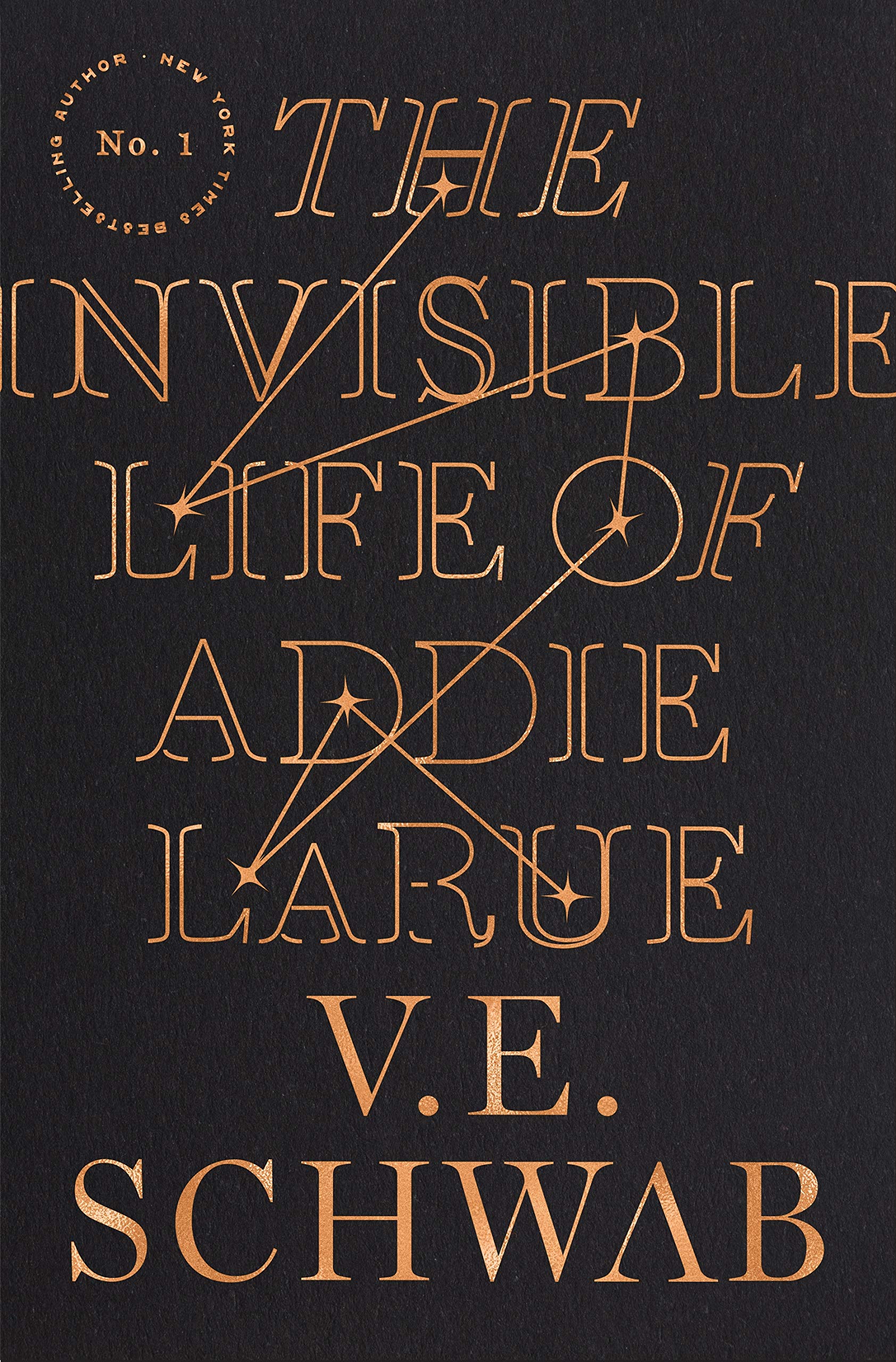
Book Blog #405: The Invisible Life of Addie LaRue by V.E. Schwab


Title: The Invisible Life of Addie LaRue

Author: V.E. Schwab

# of Pages: 442 (hardcover)

Genre: Adult, Fantasy, Contemporary

Rating: ★★★★☆

Synopsis: France, 1714: In a moment of desperation, a young woman makes a Faustian bargain to live forever—and is cursed to be forgotten by everyone she meets. Thus begins the extraordinary life of Addie LaRue, and a dazzling adventure that will play out across centuries and continents, across history and art, as a young woman learns how far she will go to leave her mark on the world. But everything changes when, after nearly 300 years, Addie stumbles across a young man in a hidden bookstore and he remembers her name.

Review: I went in expecting a fantasy romance and instead got a contemplative contemporary laced with magical realism. But the best part is I fell in love with this story more than I expected. 

This story was basically a big hypothetical scenario on what would life looked like if you had unlimited time (which most people wish they had more of) but no one remembered you (what many fear will happen in death). It makes me feel existential in the best way possible but also inspired; if Addie can still find beauty in being alive after 300 years then so can everyone else in our relatively short lives.

This book is pretty reads slowly in that there's a lot of nostalgic, vibes based writing that isn't directly related to the plot (the book would be 1/3 shorter if we cut out all the "fluff"). Although I wished the plot was a bit stronger, I actually liked the fluff in this case. The dialogue was simplistic, but the descriptions were so cinematic that captures not only the visual aspect but emotional as well. This is one of the few books I've read where the experience felt more like a movie in my mind.

Some parts actually reminded me of A Little Life, partially because both showcase the romantic aspects of NYC, but also because the story would jump between perspectives (but for this book, it's all in third person) and time. These latter two were actually downsides for me and almost made me want to give this book 3 stars (the chapters are short, so ever perspective change and/or time skip kept breaking my immersion).

I was really invested in learning more about Addie, the demon with whom she make a bargin, and the young man at the bookstore (no spoilers!) and how at least the former two are morally grey. I also really enjoyed reading about their relationships especially in the last 1/3 of the book. 

However, the magical realism aspect of this story is pretty weak; the story is best enjoyed if you DON'T think too much about the rules. The rules aren't even clear to Addie, which is fine, but even by the end it's pretty ambiguous to the reader and feels like there's conflicting examples on when the curse does/doesn't apply. 

Got a bit emotional at the end thinking about mortality. Would recommend for people who like feeling existential and are okay with sad reads.

Tuesday, July 7, 2026

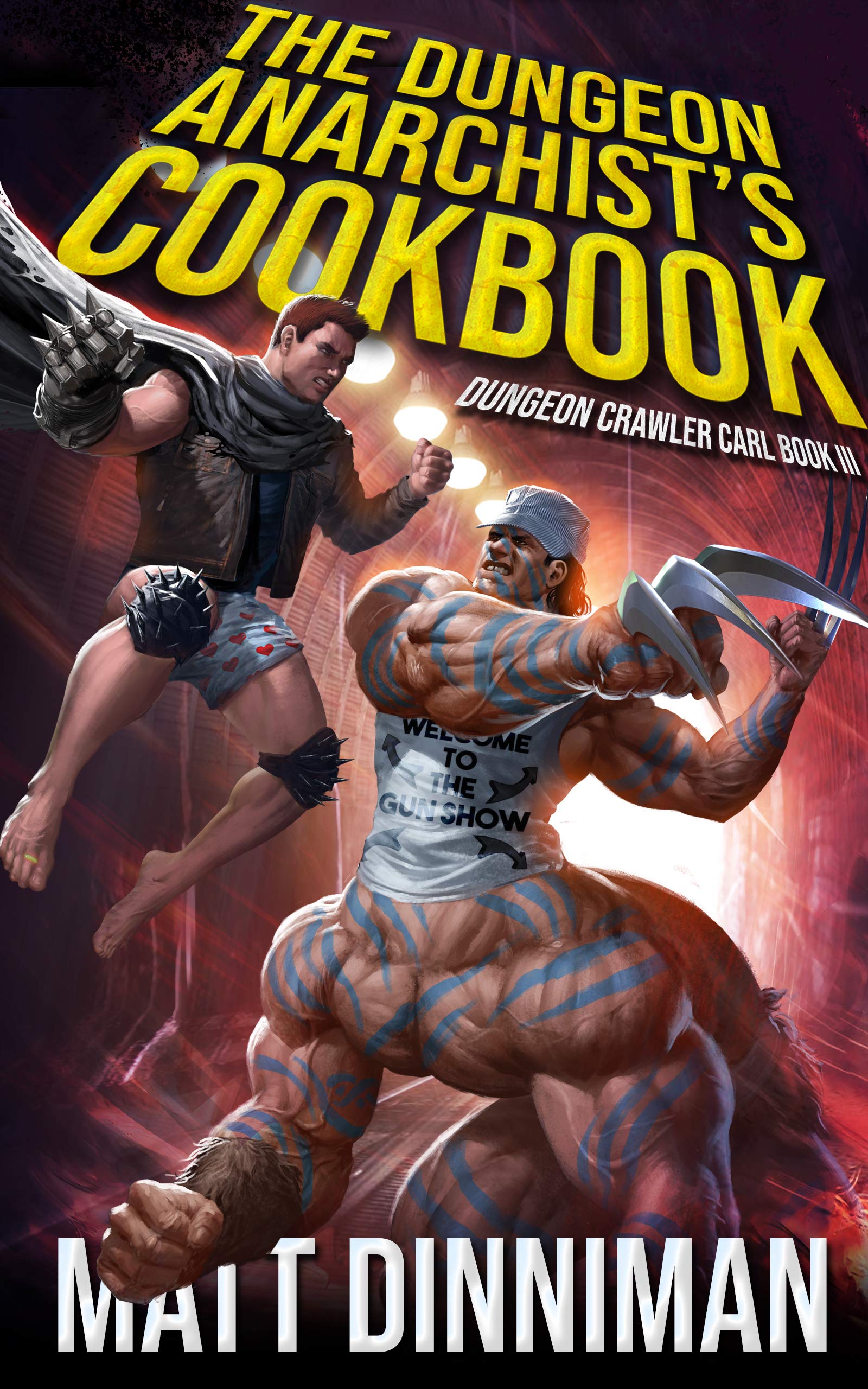
Book Blog #404: The Dungeon Anarchist's Cookbook by Matt Dinniman


Title: The Dungeon Anarchist's Cookbook

Author: Matt Dinniman

# of Pages: 524 (ebook)

Genre: Adult, Adventure, Dystopia

Rating: ★★★☆☆

Synopsis: Welcome to the Gun Show! The top 10 list is populated. The sponsorship program is open. The difficulty is ramping up. The first three floors were nothing compared to what Carl and Donut now face. The Iron Tangle. An impossibly complicated subway system built out of the world's subterranean railway systems, all combined and then tied together into a knot. Up is down. Down is up. Close is far. The cars are filled with monsters, the railway stations are less than safe, and the exit is always just a few stops away. But there is hope. For the first time, the crawlers are all working together. The loot is better than ever. And the secret to unraveling it all may be hidden in the pages of a seemingly useless book. Welcome, crawlers. Welcome to the fourth floor of the dungeon.

Review: This might be my favorite DCC so far in the series. 

I saw this book was actually the lowest rated in the whole series on Goodreads, with many reviews citing the train concept as being a drag. Dinniman even puts a disclaimer at the beginning of the book saying that the train system is complicated and that it's a puzzle for Carl and co to figure out, not the reader. I will say that the train system didn't affect my interest in the book (and if you go in aiming to have a surface level understanding, it should be enough to follow the plot). However, if you need to have a warning that your book is hard to understand, it might be a sign that something should be done about it (maybe add more visuals or focus only on the most important parts of the complex system). 

Trains aside, what really stood out was how the plot showcased a lot of returning characters! This felt like a turning point in the series where there's enough character and world building and now the books can focus on interpersonal relationships, teamwork, etc, which is something I really love to read about. Even though there was less crass humor and Moredecai was MIA for large parts of the book, the amount of returning characters and their interactions still elevated the book enough to be engaging.

Would recommend this one if you're already invested in the series!

Sunday, June 28, 2026

Book Blog #403: The Tenant by Frieda McFadden


Title: The Tenant

Author: Freida McFadden

# of Pages: 344 (paperback)

Genre: Adult, Thriller, Mystery

Rating: ★★★☆☆

Synopsis: Blake Porter is riding high, until he's not. Fired abruptly from his job as a VP of marketing and unable to make the mortgage payments on the new brownstone that he shares with his fiancee, he's desperate to make ends meet. Enter Whitney. Beautiful, charming, down-to-earth, and looking for a room to rent. She's exactly what Blake's looking for. Or is she? Because something isn't quite right. The neighbors start treating Blake differently. The smell of decay permeates his home, no matter how hard he scrubs. Strange noises jar him awake in the middle of the night. And soon Blake fears someone knows his darkest secrets... Danger lives right at home, and by the time Blake realizes it, it'll be far too late. The trap is already set.

Review: This was an EXTREMELY fast and easy read. 

This is my first McFadden book, and it's clear that she knows how to write for the masses. The writing style is quite simple and very plot-focused (definitely not some literary masterpiece). The story is told in from a couple point of views (for the most part in series) in first person present tense, so you are along for the ride with Blake in figuring out why his life is going so wrong so suddenly. Usually I strongly dislike first person POV switching, but since the different POVs weren't intertwined, this actually didn't bother me. 

I'm not a huge fan of thrillers (this was meant to be a daytime-only read for me), but I was glad to find this was scary in the sense that weird events happen in Blake's life that the reader doesn't find out how it happened until later. There's less explicit "thrilling" scenes compared to Verity (e.g. no freaky lady jump scaring the main character by staring at her), although the concept of strange events happening at home while a couple lives with a random new person is coincidentally very similar. It also reminded me a bit of the Black Mirror episode Bête Norie (but based in reality), so the story's premise is nothing super original. 

I was totally expecting to not be entertained by her books (since she's so popular with The Housemaid series, I was bracing myself for an overhyped read). However, I was pleasantly surprised that I incorrectly guessed the twist, and I couldn't put the book down (read in <1 day). 

Something I didn't like is how the characters wouldn't follow through with logical solutions (e.g. if you're bothered by loud noises and can't get them to stop, why not try wearing earplugs or doing something else within your control? If you're broke, why insist to talk to someone in person rather trying first to call them and save the drive out as a backup plan?). The story also relies on the miscommunication trope which is always frustrating. The very ending seemed rushed; didn't really need the epilogue. 

Overall a very light (but still somewhat thrilling) read; would recommend it to people who already like the mystery-thriller genre. 

Saturday, June 27, 2026

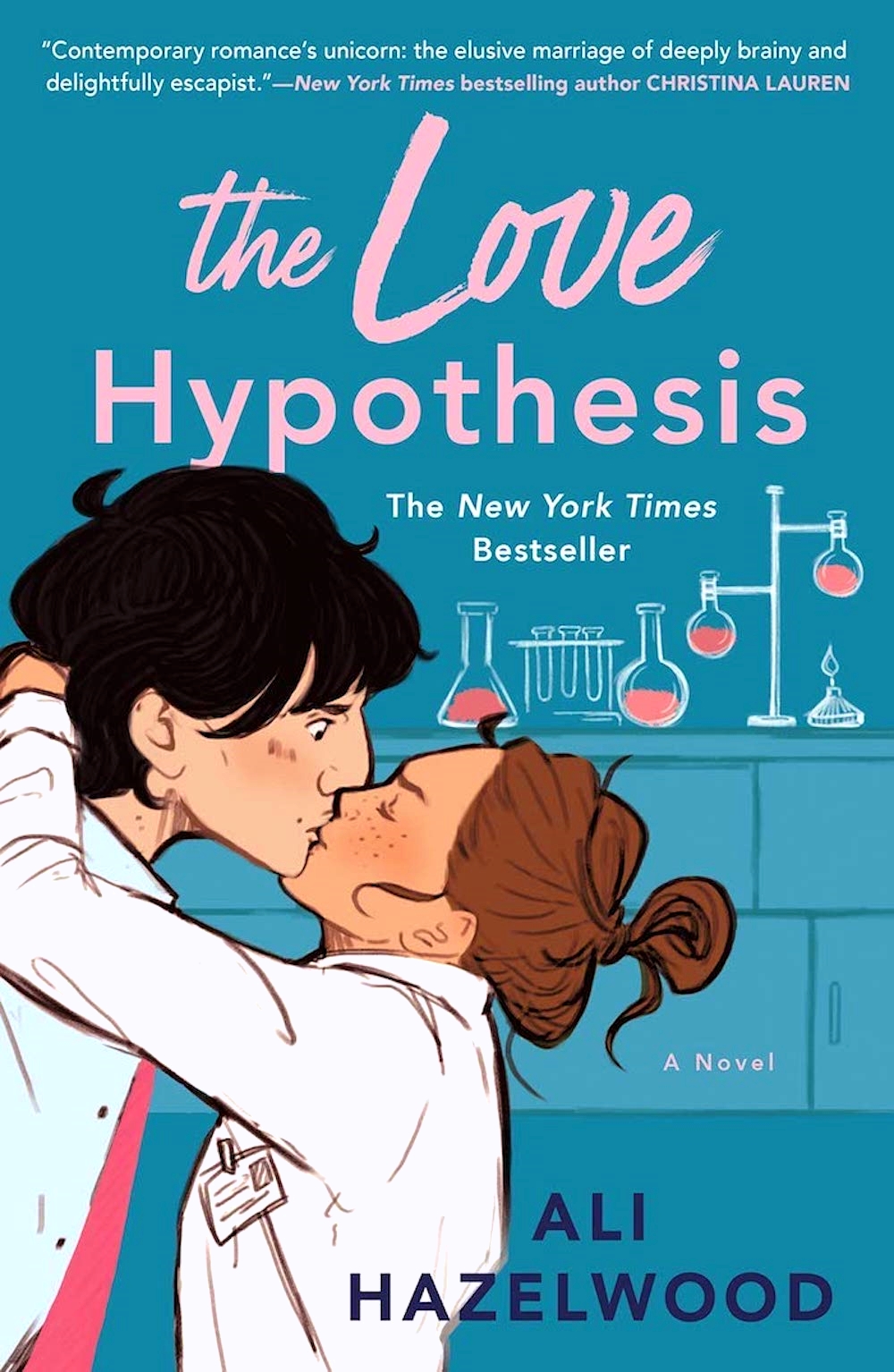
Book Blog #402: The Love Hypothesis by Ali Hazelwood


Title: The Love Hypothesis

Author: Ali Hazelwood

# of Pages: 383 (ebook)

Genre: Adult, Contemporary, Romance

Rating:★★★★☆

Synopsis: As a third-year Ph.D. candidate, Olive Smith doesn't believe in lasting romantic relationships--but her best friend does, and that's what got her into this situation. Convincing Anh that Olive is dating and well on her way to a happily ever after was always going to take more than hand-wavy Jedi mind tricks: Scientists require proof. So, like any self-respecting biologist, Olive panics and kisses the first man she sees. That man is none other than Adam Carlsen, a young hotshot professor--and well-known ass. Which is why Olive is positively floored when Stanford's reigning lab tyrant agrees to keep her charade a secret and be her fake boyfriend. But when a big science conference goes haywire, putting Olive's career on the Bunsen burner, Adam surprises her again with his unyielding support and even more unyielding...six-pack abs. Suddenly their little experiment feels dangerously close to combustion. And Olive discovers that the only thing more complicated than a hypothesis on love is putting her own heart under the microscope.

Review: This was WAY more enjoyable and fun than I expected.

The premise is nothing new; it follows the usual progression of any other friend to lovers romance, male savior fantasy. I was really in the mood to read something strongly focused on a love story, especially after reading a lot of books that had 0 romance (e.g. Dungeon Crawler Carl, The Poppy War). It checked all the boxes, plenty of yearning and sweet moments where the characters show how much they care about each other.

"This is a Hallmark movie. Or a poorly written young adult novel. That will not sell well."

What made this story standout is that its a metafiction. Hazelwood is self-aware of exactly what is serving the audience; a protagonist who is "a living, breathing, rom-com trope machine." I loved the commentary from the other characters on the ridiculousness of the premise and how exaggerated each trope plays out. 

But one trope I didn't enjoy was how prominent miscommunication is central in the conflict, especially at the end of the story. ESPECIALLY since this is not some high school romance; these are supposed to be more mature, intelligent adults in a relationship.

Hazelwood also does her signature "throw in a few tidbits of women empowerment in STEM". While the messaging is good, the execution feels random and non-cohesive with the main plot.

Overall, much much better Hazelwood's Deep End that I read earlier this year, despite both stories suffering from the bad communication trope. The characters were more likable, and it was more believable that the two main characters developed a relationship that isn't just based on lust.

Would recommend this to people who are interested in a fun, easy to read romance!

Tuesday, June 23, 2026

Book Blog #401: The Poppy War by R.F. Kuang


Title: The Poppy War

Author: R.F. Kuang

# of Pages: 530 (ebook)

Genre: YA, Historical Fiction, Fantasy

Rating: ★★☆☆☆

Synopsis: When Rin aced the Keju—the Empire-wide test to find the most talented youth to learn at the Academies—it was a shock to everyone: to the test officials, who couldn’t believe a war orphan from Rooster Province could pass without cheating; to Rin’s guardians, who believed they’d finally be able to marry her off and further their criminal enterprise; and to Rin herself, who realized she was finally free of the servitude and despair that had made up her daily existence. That she got into Sinegard—the most elite military school in Nikan—was even more surprising. But surprises aren’t always good. Because being a dark-skinned peasant girl from the south is not an easy thing at Sinegard. Targeted from the outset by rival classmates for her color, poverty, and gender, Rin discovers she possesses a lethal, unearthly power—an aptitude for the nearly-mythical art of shamanism. Exploring the depths of her gift with the help of a seemingly insane teacher and psychoactive substances, Rin learns that gods long thought dead are very much alive—and that mastering control over those powers could mean more than just surviving school. For while the Nikara Empire is at peace, the Federation of Mugen still lurks across a narrow sea. The militarily advanced Federation occupied Nikan for decades after the First Poppy War, and only barely lost the continent in the Second. And while most of the people are complacent to go about their lives, a few are aware that a Third Poppy War is just a spark away . . . Rin’s shamanic powers may be the only way to save her people. But as she finds out more about the god that has chosen her, the vengeful Phoenix, she fears that winning the war may cost her humanity . . . and that it may already be too late.

Review: I heard rave reviews both online and irl, but I don't understand the hype. I was ready for a dense adult high fantasy, but instead The Poppy War is an unserious YA historical fiction with magical/religious elements. 

Part 1 (aka the first 200 pages) was suffering through some shallow exposition that honestly felt like some blend of Harry Potter/Divergent/<insert your popular YA fantasy sci-fi book here>. The plot points during this part are very predictable (classic underdog heroine takes on seemingly impossible tasks! story).

Kuang introduces a lot of characters without diving deeper into their characters and their interpersonal relationships. Even the protagonist Rin is incredibly generic; a hormonal teenager who doesn't really know who she likes/loves/cares about and what motivates her since she's some random orphan who doesn't have commitments other than surviving. 

The pacing of the story picked up quite a bit in Part 2 and 3. There's significant war events that happen and plenty of gore-y descriptions that can keep the reader interesting, By this point I could appreciate some of the characters a bit more (surprisingly I really liked Nezha and Rin's relationship since it's more complex than just straight a enemies/friends/mentor/idol relationship that Rin has with other characters). 

Overall I wished there was more focus on interpersonal relationships and more unique world building than just relying/repackaging Chinese history. I didn't know too much about this part of history but I would have preferred a more original story that was loosely inspired by real Chinese culture; I kept wondering if I was missing something by mostly missing the references to real foods/events/countries. 

The story doesn't end in a cliff hanger per se, but there's a lot that unresolved. But when I finished the book I found that I didn't really care about what happened next. I won't be reading the other two books in a hurry.

Saturday, May 30, 2026

Book Blog #400: The Nightingale by Kristin Hannah


Title: The Nightingale

Author: Kristin Hannah

# of Pages: 593 (ebook)

Genre: Adult, Historical Fiction, Romance

Rating: ★★★★☆

Synopsis: Despite their differences, sisters Vianne and Isabelle have always been close. Younger, bolder Isabelle lives in Paris while Vianne is content with life in the French countryside with her husband Antoine and their daughter. But when the Second World War strikes, Antoine is sent off to fight and Vianne finds herself isolated so Isabelle is sent by their father to help her. As the war progresses, the sisters' relationship and strength are tested. With life changing in unbelievably horrific ways, Vianne and Isabelle will find themselves facing frightening situations and responding in ways they never thought possible as bravery and resistance take different forms in each of their actions.

Review: A solid read! 

I’ve only read one other Kristin Hannah book so far (The Women), and compare to that one, The Nightingale has protagonists with more compelling life journeys. However, the storytelling execution was weaker. The story has two 3rd person POVs: Vianne and Isabelle who live in France during WWII. 

I didn’t know much about WWII from the French POV, so to hear about the suffering that even from those who weren’t specifically targeted by the Nazis was shocking.

The author has a knack for writing unlikable characters since I didn’t enjoy Vianne similarly to how I was frustrated with Frankie from The Women. Being forced to switch between Vianne’s and Isabelle’s perspectives broke the immersion and slowed the pace of the story because I kept wanting to read Isabelle’s perspective instead.

That being said, for the characters in general, I appreciate how not all of these characters are perfect. Despite their flaws, at least one character shows growth throughout the story that makes their personality flaws redeemable.

There’s also a mysterious first person perspective that takes place long after the war has ended. This narrative was unnecessarily interwoven with the third person narrative; it added nothing to the main story and could’ve been shortened into an epilogue. 

In typical soap opera (but maybe Kristin Hannah’s recurring  storytelling pattern), major events happen coincidentally timed to maximize shock value. It’s unrealistic in a way that’s sometimes cheesy, but I still enjoyed the plot despite this. 

Although I wasn’t as engaged in this story as I was for The Women (although maybe I’m just a sucker for romance), The Nightingale succeeds where The Women failed: Vianne’s and Isabelle’s stories are stories worth telling. 

Friday, May 22, 2026

Book Blog #399: Carl's Doomsday Scenario by Matt Dinniman


Title: Carl's Doomsday Scenario

Author: Matt Dinniman

# of Pages: 400 (ebook)

Genre: Adult, Science Fiction, Adventure

Rating: ★★★☆☆

Synopsis: The ratings and views are off the chart. The fans just can't get enough. The dungeon gets more dangerous each day. But in a grinder designed to chew up and spit out crawlers by the millions, Carl and Princess Donut need to work harder than ever just to survive. They call it the Over City. A sprawling, once-thriving metropolis devastated by a mysterious calamity. But these streets are far from abandoned. An undead circus trawls the ruins. Murdered prostitutes rain from the sky. An ancient spell is finally ready to reveal its dark purpose. Carl still has no pants. They call it Dungeon Crawler World. For Carl and Donut, it's anything but a game.

Review: Not as big of a fan of this one compared to the first one. The main focus is introducing quests to the dungeon. When they are working through each quest, the quests are unrelated to each other, so it felt like I was reading different stories. I would've liked it more if there was a greater focus on progressing some of the plot lines started in the first book. 

The first half had me interested, but my reading progressed slowed down with the last quest because I wasn't too interested in that storyline. 

Low 3 stars, but will consider reading the next book after taking a break. 

Friday, May 15, 2026

Book Blog #398: To Drown Among The Stars by L.K. Frost


Title: To Drown Among The Stars

Author: L.K. Frost

# of Pages:

Genre: Adult, Romance, Fantasy

Rating: ★★☆☆☆

Synopsis: In an unprecedented turn of events, Bastion emerges from his Trial of Knighthood a failure. Certain the gods have abandoned him, he travels down the coast on a leave of absence, looking for solitude. Instead, he walks into trouble in the wake of a series of pirate attacks on seaside villages, where he meets Ulla, a deaf dragon-kin healer with secrets of her own. Despite their initial, disastrous meeting, they’re drawn together by their mutual loneliness. Then, they discover the attacks aren’t random - they’re coordinated. The pirates are planning a large-scale attack on Moonwatch, the kingdom’s naval base, with the intent of stealing an ancient secret. Together, Bastion and Ulla race to Moonwatch only to learn the commander has been drawn away by the attacks. Unable to deny his duty or his very nature, Bastion takes command of their diminished forces in the face of a pirate fleet armed with a mysterious weapon. When Ulla is wounded, the world comes crashing down on Bastion and he must reveal his darkest secret to save her, even though it may mean losing her, after all.

Review: I received an ARC directly from the author. 

To Drown Among the Stars had a lot of potential (the premise sounded interesting to me!) but unfortunately it fell short of expectations.

Each scene in isolation is pretty decently written (immersively descriptive) but the transitions between them were abrupt or the catalyst in a change of action seemed random and unrealistic. Multiple times throughout the story, Bastion ends up wandering around for time to think or for some unexplained "leave of absence" that didn't feel nature with the flow of the greater story. 

The writing was too verbose on aspects that don't matter. Instead of spending a few sentences describing an empty pint rolling along the ship floor, those lines could've been spent doing more world building or moving the plot forward. I actually had to check if this was a sequel in a series because it read as if world building and character backstories were covered in a previous book.

The characters are not fully developed; they felt flat. The reader is told by other characters how they would characterize Bastion (a man of high moral character), but the story didn't show his personality. Am I supposed to view him as a young knight-to-be who's still building his confidence? or an experienced swordsman with authority? The characterization flipped flopped between the two personas without a it being clear on what type of person Bastion is supposed to be. 

The romance between the main characters came off more as infatuation rather than actual romance (there's a lot of focus on how Bastion feels when he's interacting with Ulla, and not as much about what he loves/cares about her as he spends more time with her). Despite being depicted as independent and capable, the female lead Ulla is just a narrative accessory for Bastion's journey rather than a fully autonomous character.

While I was excited to read this, I had a hard time staying engaged in the story and feeling invested in the characters. There's some major improvements that I'd want to see before I recommended this book to someone.